
Preparing for cast-off: Banks forced to work harder to meet higher buyer bar for acquiring shipping loan portfolios

Banks’ shipping loan portfolio disposals have soared in recent years. But with fewer easy-sells on the books and private equity acquirers becoming pickier in a buyer’s market, closing the deal means banks need to prepare and market portfolios more rigorously.
2018 and 2019 were record years for shipping loan portfolio sales before COVID-19 saw things grind to a halt. The surge in sales highlighted in Exhibit 1 doesn’t include most of the smaller individual facility sales, which are quite prevalent in the shipping sector, but not often disclosed.
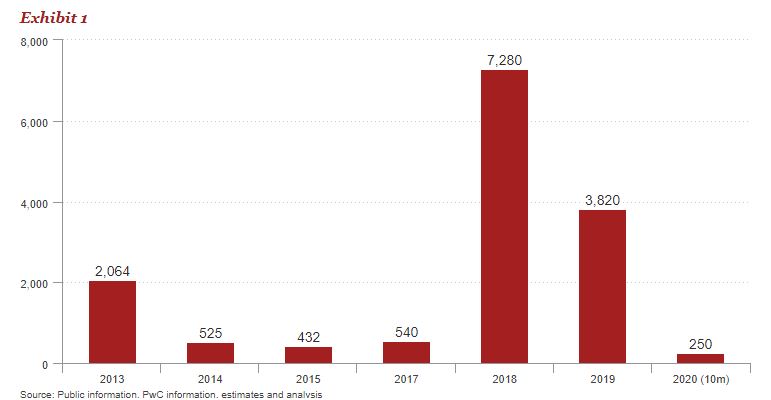
Banks have been keen to reduce their shipping exposures because of the prolonged volatility in the sector and a desire to limit the need for USD funding. Further pressure to reduce shipping exposures is coming from higher capital demands under the incoming ‘Basel IV’.
Exhibit 2 illustrates the dramatic reduction in the portfolio size of key shipping banks.
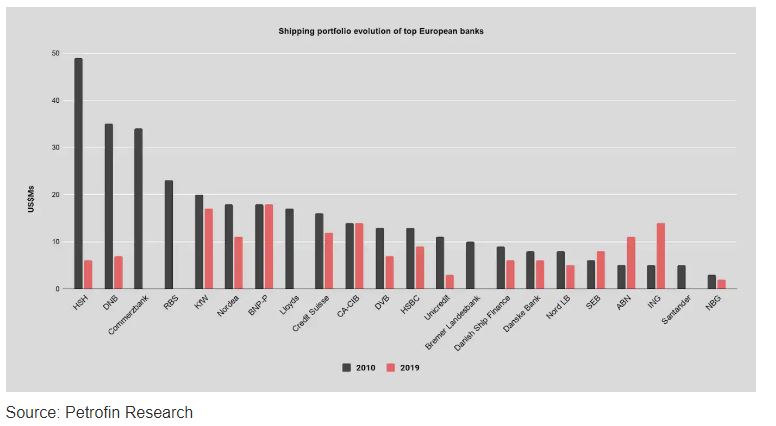
Looking ahead, the shipping and offshore markets are set to remain uncertain and volatile. This is likely to hold back bank lending and hasten loan portfolio divestment. 2019 did see some welcome respite for shipping companies as rates improved and they benefited from the dip in oil prices reducing fuel costs. This not only bolstered returns but also the performance of troubled loans. Yet the upturn already looks like it’s running out of steam, with most shipping segments facing oversupply. The challenges facing the shipping sector are compounded by trade tensions and uncertainty over the global economy, the combination of which has been further exacerbated by COVID-19.
Non-bank lenders step in
While there is some new lending from certain banks, this tends to be selective, focused on larger groups that offer cross-selling opportunities and channelled directly rather than through special purpose vehicles as in the past. Shipping companies have been seeking alternative sources of funding to plug the gap. This includes export credit agency (ECA) financing and leasing structures. A limited number of highly experienced private equity (PE) funds are also eyeing the opportunities to step into the market through the provision of private placement bonds and structured financing, along with direct vessel ownership through the formation of joint ventures with shipping companies.
In addition, new platforms with ex-banking shipping professionals are looking to enter the new loan origination market. These new entrants are planning to partner with either experienced PEs or high net worth individuals that aim to generate IRRs in excess of 10%. The growth opportunities appear to be significant and the supply of financing to date has not, in our mind, been adequate to satisfy the financing needs, especially of mid-market shipping borrowers.
As shipping companies increasingly rely on non-bank lending, it’s important to establish and strengthen relationships with these new sources of capital. They will also have to manage the higher margins required by PE funders and the lack of flexibility in ECA and lease transactions.
Loan sale cycle enters new phase
While banks are keener to reduce their exposure in preparation for Basel IV, finding willing buyers is proving increasingly challenging. Having already taken on significant shipping loan portfolio holdings, some PE funds are becoming more selective in what further acquisitions they’re prepared to make.
While Asian strategic buyers have seized the opportunity to expand their presence in the European market, they generally prefer closely targeted performing portfolios over large acquisitions with a mix of vessels and loans of varying quality.
Servicing remains a key area of focus for established investors. As demand increases, service providers are looking to expand their teams. We’re also seeing new entrants coming into the market, with many of the experienced staff coming from banks that are reducing their shipping exposures.
How then can banks secure a successful sale in this more challenging market? Our work with both buyers, sellers and potential funders underlines the need for a lot more preparation than before, along with a stronger view on the long-term strategic options for the portfolio being sold or the pipeline being considered for origination. This includes meeting the high information requirements of a small number of potential investors, especially for banks that are not as experienced in the portfolio disposal process.
New dynamics, new opportunities
We believe that, as banks are still in the process of dealing with the repercussions of COVID-19 as well as new regulatory requirements stemming from the introduction of Basel IV, shipping loan portfolios will come up for a sale probably around the end of 2021 or early 2022, as conditions begin to normalise.
In the meantime, we see a significant opportunity for investors with a longer term horizon that are looking to expand their presence in the shipping market to take advantage of new financing opportunities, especially with mid market creditworthy borrowers that are looking to expand their businesses. Please get in touch if this is something that it is of interest to you.
https://www.pwc.co.uk/
