
EU restrictive measures in response to the crisis in Ukraine
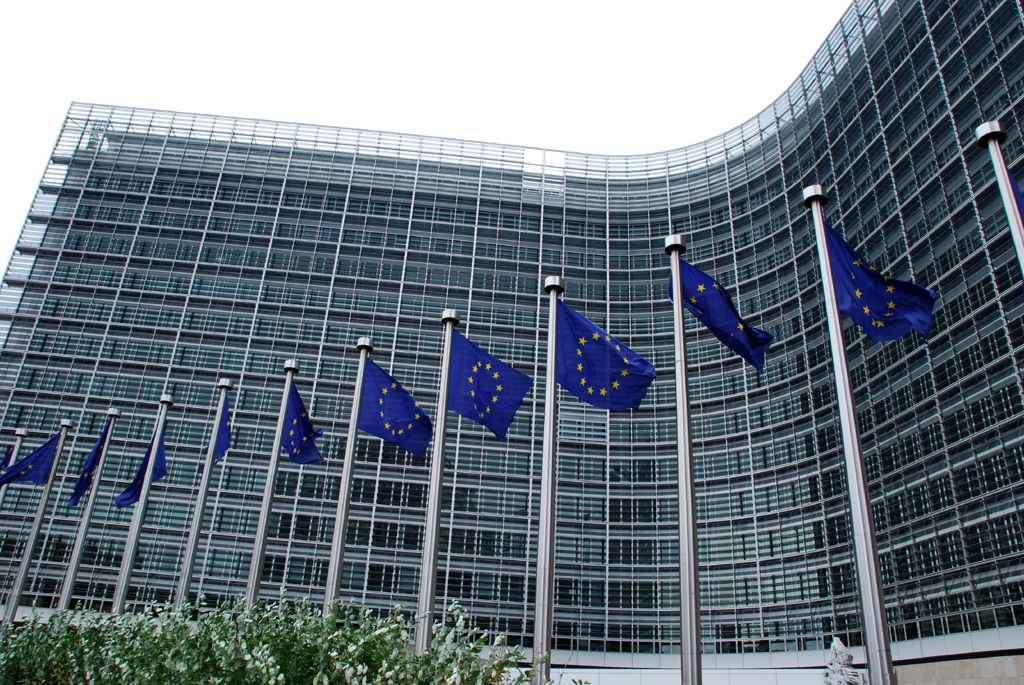
EU adopts further measures to respond to Russia’s military aggression
The EU is taking measures to respond to the unprovoked and unjustified military aggression carried out by the Russian Federation against Ukraine.
On 28 February, the Council approved:
• a ban on transactions with the Russian Central Bank
• € 500 million support package to finance equipment and supplies to the Ukrainian armed forces
• a ban on the overflight of EU airspace and on access to EU airports by Russian carriers of all kinds
• new sanctions on persons and entities
On 25 February 2022, the EU decided to freeze the assets of Vladimir Putin, President of the Russian Federation, and Sergey Lavrov, Minister for Foreign Affairs of the Russian Federation.
On 23 February 2022, the Council agreed on a first package of sanctions in response to the recognition by Russia of the non-government controlled areas of the Donetsk and Luhansk oblasts in Ukraine as independent entities.
More information:
• Timeline – EU restrictive measures in response to the crisis in Ukraine (background information)
Since March 2014, the EU has progressively imposed restrictive measures in response to the:
• illegal annexation of Crimea in 2014
• decision to recognise the non-government controlled areas of Donetsk and Luhansk oblasts as independent entities in 2022
• unprovoked and unjustified military aggression against Ukraine in 2022
The EU has imposed different types of restrictive measures:
• diplomatic measures
• individual restrictive measures (asset freezes and travel restrictions)
• restrictions on economic relations with Crimea and Sevastopol, and with the non-government controlled areas of Donetsk and Luhansk
• economic sanctions
• restrictions on economic cooperation
Below you can find more information on each type of restrictive measures.
Diplomatic measures
In 2014, the EU-Russia summit was cancelled and EU member states decided not to hold regular bilateral summits with Russia. Bilateral talks with Russia on visa matters, as well as on the new agreement between the EU and Russia, were suspended.
Instead of the G8 summit in Sochi, a G7 meeting was held – without Russia – in Brussels on 4-5 June 2014. Since then, meetings have continued within the G7 process.
EU countries also supported the suspension of negotiations over Russia’s joining the Organisation for Economic Co-operation and Development (OECD) and the International Energy Agency (IEA).
In February 2022, following Russia’s military aggression against Ukraine, the EU decided that diplomats, other Russian officials and business people are no longer able to benefit from visa facilitation provisions, which allow privileged access to the EU. This decision doesn’t affect ordinary Russian citizens.
Individual restrictive measures
Asset freezes and travel restrictions
680 people and 53 entities are subject to an asset freeze and a travel ban because their actions have undermined Ukraine’s territorial integrity, sovereignty and independence. The list of sanctioned persons and entities are kept under constant review and are subject to periodic renewals by the Council.
These measures were introduced in March 2014. They were last extended until 15 March 2022.
Misappropriation of Ukrainian state funds
In March 2014, the Council decided to freeze the assets of individuals responsible for the misappropriation of Ukrainian state funds. These measures were last extended in March 2020 until 6 March 2022.
Restrictions on economic relations with Crimea and Sevastopol
The Council adopted restrictive measures in response to the illegal annexation of Crimea and Sevastopol by the Russian Federation.
The measures apply to EU nationals and EU-based companies. Their scope is limited to the territory of Crimea and Sevastopol.
These measures include:
• an import ban on goods
• restrictions on trade and investment related to certain economic sectors and infrastructure projects
• a prohibition on supplying tourism services
• an export ban on certain goods and technologies
On 21 June 2021, the Council extended these measures until 23 June 2022.
Restrictions on economic relations with non-government controlled areas of Donetsk and Luhansk
The Council adopted restrictive measures in response to the decision by the Russian Federation to proceed with the recognition of the non-government controlled areas of Donetsk and Luhansk oblasts in Ukraine as independent entities, and the ensuing decision to send Russian troops into these areas.
The scope of the measures is limited to the non-government controlled territories of Donetsk and Luhansk oblasts. These measures include:
• an import ban on goods
• restrictions on trade and investment related to certain economic sectors
• a prohibition on supplying tourism services
• an export ban on certain goods and technologies
These measures are in place until 23 February 2023.
Economic sanctions targeting exchanges with Russia in specific economic sectors
In July and September 2014, the EU imposed economic sanctions targeting exchanges with Russia in specific economic sectors.
In March 2015, EU leaders decided to align the existing sanctions regime to the complete implementation of the Minsk agreements, which was scheduled for the end of December 2015. Since this did not happen, the Council extended the economic sanctions until 31 July 2016.
The economic sanctions have been extended successively for six months at a time since 1 July 2016. The decision to extend them was made each time following an assessment of the implementation of the Minsk agreements. The economic sanctions are currently extended until 31 July 2022.
These restrictive measures:
• limit access to EU primary and secondary capital markets for certain Russian banks and companies
• impose an export and import ban on trade in arms
• establish an export ban on dual-use goods for military use or military end users in Russia
• impose an export ban in goods and technology in the aviation and space industry
• curtail Russian access to certain sensitive technologies and services that can be used for oil production and exploration
In February 2022, the EU adopted new measures:
• restriction of access the EU’s capital and financial markets and services
• a ban on transactions with the Russian Central Bank
• a ban on the overflight of EU airspace and on access to EU airports by Russian carriers of all kinds
Measures concerning economic cooperation
Restrictions on economic cooperation were introduced by EU leaders in July 2014:
• the European Investment Bank (EIB) was requested to suspend the signing of new financing operations in the Russian Federation
• EU member states agreed to coordinate their positions within the European Bank for Reconstruction and Development (EBRD) Board of Directors with a view to also suspending the financing of new operations
• the implementation of EU bilateral and regional cooperation programmes with Russia was re-assessed and certain programmes suspended
