
DNV launches new report to help shipowners select energy-efficiency measures and technologies
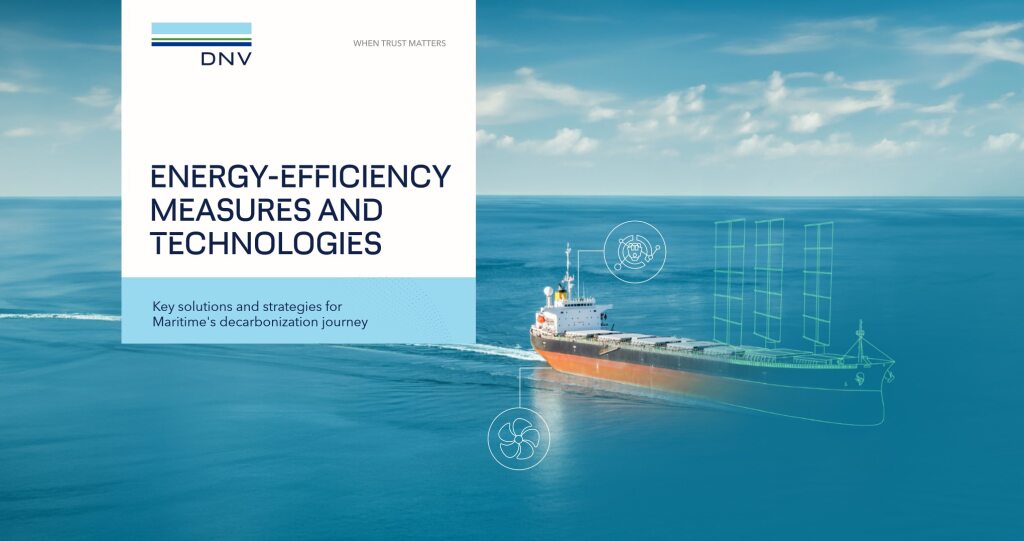
With increasing regulatory pressure and rising fuel costs, the shipping industry must accelerate decarbonization while ensuring operational and economic viability. Energy-efficiency measures can play a crucial role in reducing fuel consumption and facilitating the transition to alternative fuels as they become available. To help shipowners identify the best solutions for their fleet, DNV has published a report offering a comprehensive overview of current available energy-efficiency measures and technologies.
DNV’s latest report, Energy Efficiency Measures and Technologies – Key solutions and strategies for maritime’s decarbonization journey, provides a comprehensive overview of more than 40 energy-efficiency measures, detailing their fuel-saving effects, cost figures, and suitability for specific ship types. It highlights how these measures can help shipowners meet short- and mid-term regulatory requirements, gain a competitive edge, and ensure profitable operations well into the 2030s and 2040s.
Knut Ørbeck-Nilssen, CEO at DNV Maritime, said: “The decarbonization of shipping is one of our greatest challenges. While transitioning to carbon-neutral fuels is essential, supply and cost remain key barriers. To accelerate this shift, all possible measures must be explored. Energy efficiency measures can not only cut emissions in the short term but also support the adoption of alternative fuels by reducing overall fuel demand and operational costs. With many such measures available, our report aims to help stakeholders navigate these choices and identify the best solutions for their fleets.”
In the report, DNV explores a wide range of technical and operational measures, detailing cost considerations, suitability for different ship types, and the challenges of combining multiple solutions effectively. Digitalization also plays an important role, and the report offers insights into how data-driven decision-making can enhance fuel savings, while ensuring cybersecurity remains a priority.
DNV’s report outlines a three-step approach for managing decarbonization risks: defining greenhouse gas (GHG) trajectory and goals, assessing pathways for meeting these goals, and developing a fleet decarbonization strategy and plan. It also explores other solutions such as low-carbon and carbon-neutral fuels, biofuels, onboard carbon capture, fuel cells, and nuclear propulsion, evaluating their benefits, challenges, and emissions reduction potential.
Jason Stefanatos, Global Decarbonization Director at DNV added: “Energy efficiency is key to reducing emissions and enabling low-carbon fuel adoption. While there’s no one-size-fits-all solution, improving onboard efficiency cuts emissions in the short term and accelerates low-carbon fuel adoption in the long term. Every percentage of fuel saved, whether conventional or alternative, translates into significant cost savings. EE is becoming critical, and the industry must raise awareness, gain knowledge, and plan ahead.”
About DNV
DNV is an independent assurance and risk management provider, operating in more than 100 countries. Through its broad experience and deep expertise DNV advances safety and sustainable performance, sets industry standards, and inspires and invents solutions.
Whether assessing a new ship design, qualifying technology for a floating wind farm, analysing sensor data from a gas pipeline or certifying a food company’s supply chain, DNV enables its customers and their stakeholders to manage technological and regulatory complexity with confidence.
Driven by its purpose, to safeguard life, property, and the environment, DNV helps its customers seize opportunities and tackle the risks arising from global transformations. DNV is a trusted voice for many of the world’s most successful and forward-thinking companies.
DNV in the maritime industry
DNV is the world’s leading classification society and a recognized advisor for the maritime industry. The company enhances safety, quality, energy efficiency and environmental performance of the global shipping industry – across all vessel types and offshore structures. DNV invests heavily in research and development to find solutions, together with the industry, that address strategic, operational or regulatory challenges. For more information visit: www.dnv.com/maritime
